
Lipscomb County Criminal Docket Searches
Lipscomb County offers no official search form. None of the District Clerk, County Clerk, Justice of the Peace, or district judge pages has one for an individual case. The Texas Judicial Branch FAQ points people back to the local clerks. That goes for trial-court records too. So begin with whichever court is named on your citation, notice, bond paper, indictment, or earlier order. Felonies belong to the District Clerk. Class A and B misdemeanors usually go to the County Clerk. Class C cases stay with the Justice of the Peace. Otherwise they stay with the municipal court that issued them.
Bring the exact cause number if you have it. Without one, give the clerk a full name. Add the rough filing year, the charge or case type, and the court level. Lipscomb County publishes no local case-number format or name-search syntax. Never borrow a prefix or name order from some other county's portal. Ask for the docket sheet first when you need the timeline or the next setting. Then request the judgment, indictment, or other filed paper on its own.
- Read the source paper and identify the court and cause number.
- Call the District or County Clerk at 806-862-3091 for district or county cases.
- For a Class C matter, contact the JP or the named city court instead.
- Ask for status, latest setting, disposition, and public-copy options as separate items.
- Confirm the fee and delivery method before ordering a certified document.
Lipscomb Felony Record Route
For a felony in the 31st Judicial District Court, the trial-level record lives with the Lipscomb County District Clerk. Chrissy Dunn holds the office. You can send a written request by mail or email. The office posts 101 South Main, P.O. Box 70, Lipscomb, TX 79056, 806-862-3091, and chrissy.dunn@co.lipscomb.tx.us. Hours run 8:30 a.m. to 5:00 p.m. The office closes from noon to 1:00 p.m. for lunch. Call ahead before a long drive. The office promises no public terminal or same-day archive service.
Open your request with the words “31st Judicial District Court.” Then give the cause number, the style, an approximate date, and the exact item you want. A plain docket sheet is not a certified judgment. An indictment, a bond order, a sentencing order, and an appellate clerk's record are all distinct products too. State the court up front. That keeps your request in the district record set rather than the constitutional County Court files.
Criminal Dockets: What They Show
A Lipscomb County criminal docket indexes recorded case events. It does not replace the filed documents themselves. Short labels can leave out facts that the signed order contains. Ask the clerk to verify each field you need, and when an abbreviation is unclear, request the full entry instead of importing a meaning from another Texas court.
| Cause number | The clerk's identifier. The Lipscomb County format has not been published, so use the exact number from the case paper. |
|---|---|
| Charge | Offense name, statute, degree or class, and count when the public entry includes them. |
| Settings | Arraignment, docket call, hearing, plea, trial, sentencing, and any later reset. |
| Party and counsel | Defendant, appointed or retained counsel, and attorney-of-record details when public. |
| Disposition | Plea, judgment, deferred adjudication, dismissal, acquittal, sentence, or appeal status. |
Use the docket to locate a filed event. Then request the indictment, order, judgment, or other paper when its exact language matters.
Lipscomb Setting Terms
The county's official schedule supplies verified local terms, but no result codes. Those labels describe calendar blocks. They say nothing about what happened in any named case.
- Grand Jury
- A charging-session calendar block. It does not publicly identify all matters considered.
- Docket Call & Hearings
- A grouped case-management and hearing block, not a trial result.
- Arraignment/Hearings
- A criminal setting that may address plea, counsel, or another pending issue.
- Reset
- A later setting. It is not a dismissal or disposition.
- Mandate
- The appellate court's directive returning jurisdiction after review.
When the docket uses a short code, request the entry and its linked order. Lipscomb County has published no local “DISP,” “CONT,” or charge-code legend.
Criminal Case Stages on the Docket
A felony record can open with a complaint, information, or indictment. Arraignment and bond or counsel entries come next. Pretrial motions and docket calls may follow. A plea or trial comes after that. When required, sentencing and a signed judgment come after that stage. A notice of appeal builds a separate record at the Seventh Court of Appeals. The trial-court docket stays with the District Clerk.
Docket flow: Filing or Charge › Arraignment › Pretrial Settings › Plea or Trial › Disposition › Possible Appeal
Read each step as an event, never a verdict. A filed charge is an allegation, and an arraignment is not a conviction. A trial setting proves nothing about whether trial occurred. The signed judgment or dismissal order controls the outcome.
Lipscomb Criminal Caseload Context
The Texas Office of Court Administration's 2024 district performance report puts Lipscomb County at a 102.2 percent criminal clearance rate. The backlog index is 0.2. These are aggregate measures. A rate above 100 percent can happen when a court clears older pending work along with new filings. It says nothing about any person's result and cannot replace a case search.
The figures explain court workload. The clerk's docket answers what was filed in one cause, and the report year belongs with both numbers.
Lipscomb County Criminal Docket Courts
Which court issued the case decides where a Lipscomb County docket search starts. Not the place of arrest. Felony trials belong to the 31st Judicial District Court. Its District Clerk holds those records. The constitutional County Court takes Class A and B misdemeanors. Those are filed with the County Clerk. Justice of the Peace and municipal courts handle Class C matters. Traffic tickets fall within their own jurisdiction too. Booker and Follett both show current municipal-court entries in the state directory.
Appeals from Lipscomb County trial courts head to the Seventh Court of Appeals at Amarillo. The appellate cause number is a separate case with its own docket. Start with the trial clerk. The clerk can supply the notice and clerk's record. Then turn to the appellate court for briefing, opinions, and mandate status.
eFileTexas and Lipscomb Dockets
Filing in Lipscomb County is electronic. The official eFileTexas active-courts table lists Lipscomb civil and criminal filing as mandatory and marks Full search integration. That label describes the filing system, nothing more. It promises no free public felony register, no guest access, and no document images. The public eFileTexas landing page exists for filers. A reader chasing an actual Lipscomb County court docket should still call the right clerk.
Be careful with county payment links too. Paying online proves that money moved. It does not prove the plea, the judgment, the sentence, or any later appeal. When the full case history matters, order the docket sheet or disposition instead.
Access Rules for Criminal Dockets
Most Lipscomb County criminal docket entries are public. Public status, though, does not mean online access. Statutes, court rules, orders, and common law can restrict or redact juvenile files, sealed or expunged cases, protected addresses, grand-jury material, and sensitive identifiers. A blank result is not a dismissal. Before concluding anything, ask the clerk whether the record sits in another court, sits in an archive, was never digitized, or is legally off limits.
Access boundary: Texas Judicial Branch policy explains that Rule 12 covers judicial administrative records, while individual case records follow clerk, court, statute, rule, and order procedures.
Rule 12 is not a universal case-file request law and should not be used to bypass a sealing or confidentiality rule.
If a clerk denies access, ask for the legal basis and the proper review route. Be specific about what you need. A plain docket sheet costs less than a certified filed document. Texas Chapter 51 sets district-clerk fee baselines. Lipscomb County posts no complete local criminal-copy schedule, and no turnaround times are guaranteed.
Verify a Lipscomb Criminal Result
Start any Lipscomb County criminal-record request with one narrow question in mind. Want the next court date? Ask the clerk for the current docket sheet and the latest notice of setting. Want the actual charge? Request the indictment, information, or complaint by its title. Want the outcome? That lives in the signed judgment, the dismissal order, or the deferred-adjudication order. A one-line docket label rarely spells out full terms. Give the clerk the cause number. Give the defendant name as styled, the court, and a rough entry date. Name the exact paper you need. No cause number? Supply the filing year and offense type, and ask whether the statutory search fee applies. Lipscomb County posts no request form, no local number pattern, and no promised turnaround. A precise written description is the best substitute for portal fields.
Read a returned docket from top to bottom. Felonies belong to the 31st Judicial District Court. Class A and B misdemeanors belong to the constitutional County Court. Match the cause number against the source paper, then compare the case style, filing date, and charge. Work through the entries in date order. A complaint or indictment entry means a charge was filed, nothing more. It is not a finding of guilt. A bond entry deals with release or security, not the end of the case. Arraignment and docket call entries mark stages along the way. A trial date is only a planned event. The disposition comes later, in a judgment, acquittal, dismissal, deferred-adjudication order, or other controlling order. A "reset" entry should send you hunting for the later setting. A notice of appeal gives the case a second life. Get the appellate cause number first. Then search the Seventh Court of Appeals.
Copies come in layers. An index can be public even when the linked paper is not online. A plain copy shows the text but carries no clerk authentication. A certified copy adds the certificate or seal some official uses demand. The District Clerk charges $5 for a certificate or seal plus $1 per page for a certified paper copy. The search fee runs $5 without a cause number. Treat those figures as Texas statutory baselines. They are not a promise of the exact total in every Lipscomb County request. Ask whether the source is paper or electronic. Ask whether redaction applies. Ask how many pages will be copied and what payment the clerk accepts. Do not treat the county page's CertifiedPayments route as a copy-order form. Use it only when the clerk points you there. That decision belongs to the clerk, not the payment screen.
When a record is old or missing, keep the possible reasons separate. It may sit in the other trial court. It may be in a justice or municipal court, an archive, or a clerk-only electronic system. It may be restricted, sealed, expunged, or shielded from public display. It may simply have been transferred or appealed. Ask the clerk which condition applies instead of reading "not found" as a result. A reporter's transcript is a different errand; contact the court reporter rather than the clerk file alone. Nori Galvan handles transcripts for the 31st District Court, and no transcript price or turnaround is published. For a current setting, compare the docket against the court coordinator's answer and the latest signed notice. That chain of checks keeps the Lipscomb County criminal docket honest. An annual calendar, a payment receipt, a directory listing, or a missing online image proves nothing on its own.
Lipscomb Criminal Source Views
The 31st District Judge page provides the judge, coordinator, reporter, and local-rule links.
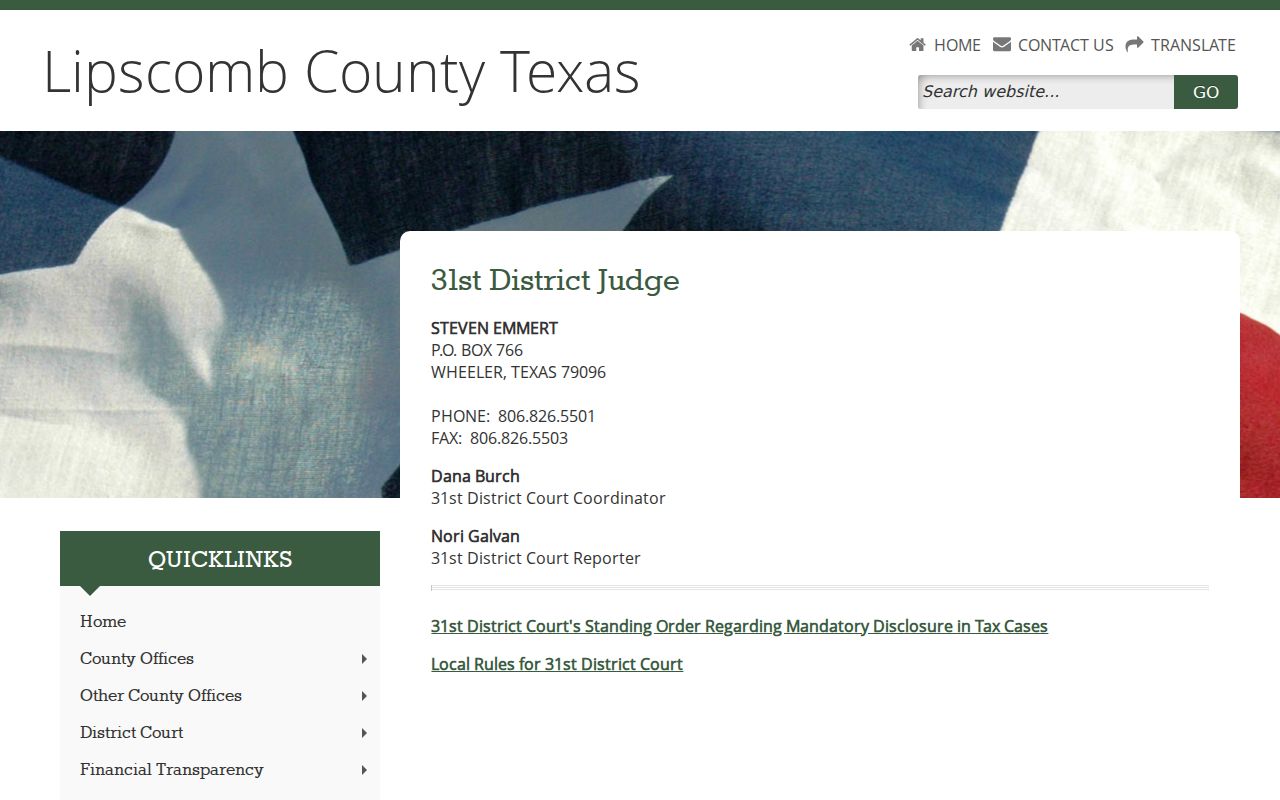
Felony record work leans on the district contacts for settings and transcripts.
The official active-courts table shows Lipscomb's mandatory status for civil and criminal filing.
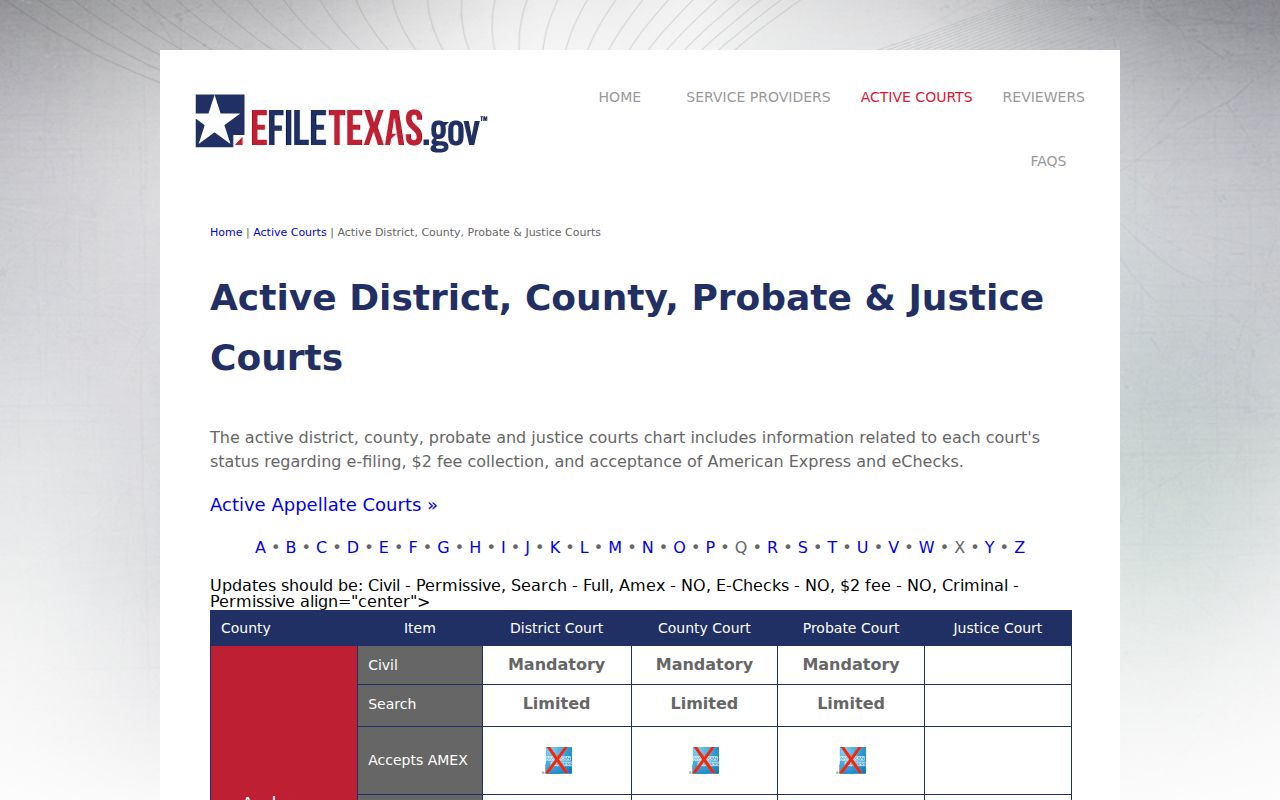
The table documents integration, not universal public access to felony records.
Lipscomb Criminal Appeal Source
The Seventh Court of Appeals page confirms Lipscomb County's state appellate route.
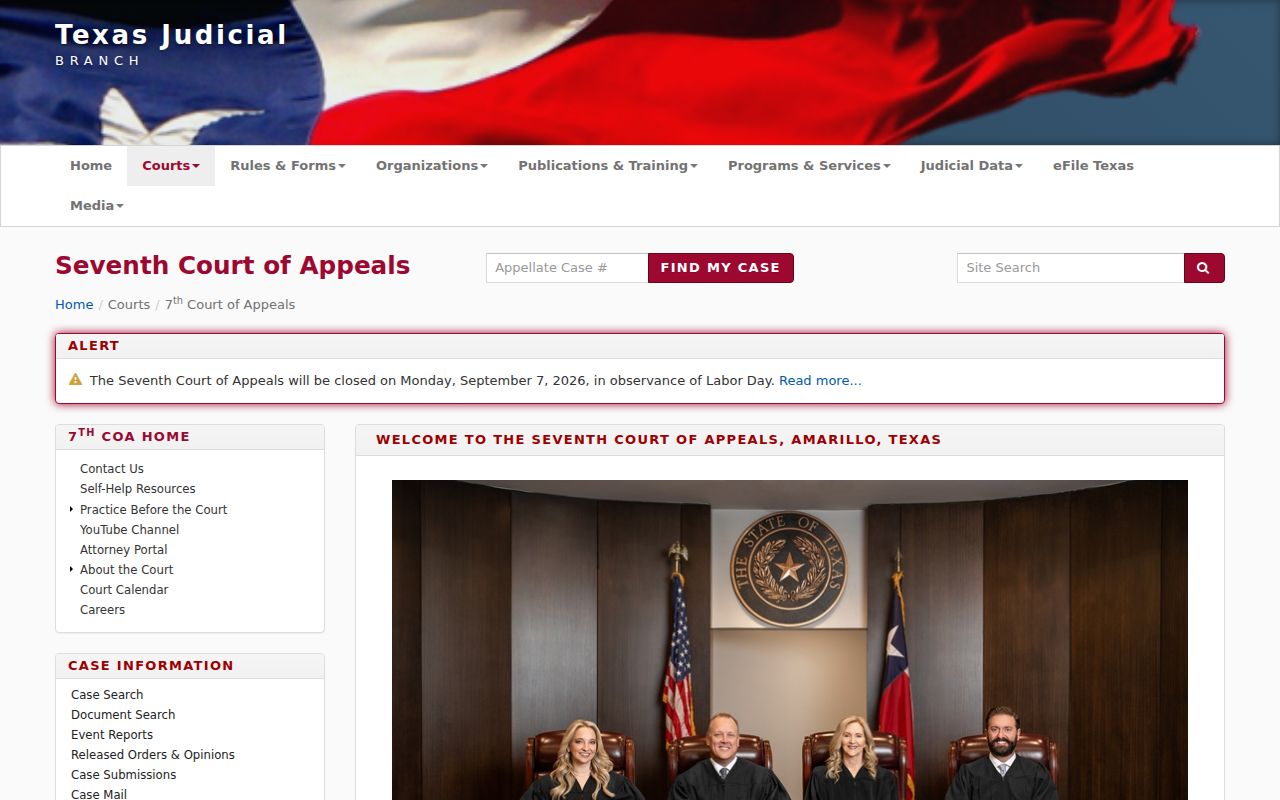
An appeal opens a separate appellate docket, while the District Clerk keeps the trial record.